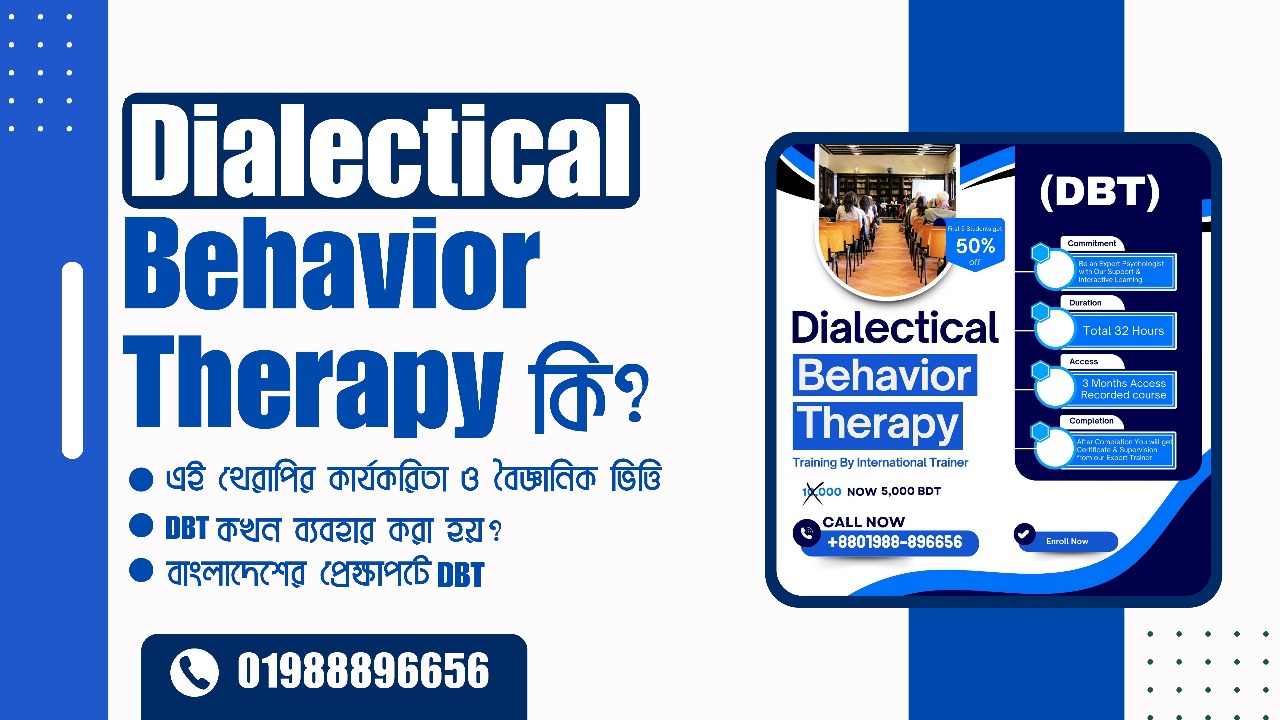
what is Dialectical Behavior Therapy (DBT) & where can we learn
Dialectical Behavior Therapy (DBT)
What is DBT?
Dialectical Behavior Therapy (DBT) is an evidence-based psychotherapy developed by American
psychologist Marsha M. Linehan in the 1980s. Initially
designed to treat Borderline Personality Disorder (BPD), DBT
is now effectively used to treat a wide range of mental health conditions,
including suicidal behavior, self-harm, emotional dysregulation, eating
disorders, depression, Post-Traumatic Stress Disorder (PTSD), and substance use
disorders.
The core philosophy of DBT is:
“Accept yourself as you are, but also work to change.”
The Four Core
Modules of DBT
DBT is structured around four primary skill areas that help
clients develop greater emotional and behavioral control:
1. Mindfulness
- Increases
present-moment awareness.
- Helps
individuals observe and describe thoughts and emotions without judgment.
- Strengthens
focus and self-awareness.
2. Distress
Tolerance
- Teaches how
to endure painful emotions or crises without resorting to harmful
behavior.
- Includes
techniques like ACCEPTS, TIPP, and IMPROVE for surviving intense emotional
experiences.
3. Emotion
Regulation
- Helps
individuals identify, understand, and manage intense emotions.
- Reduces
emotional vulnerability and reactivity.
- Promotes
emotional stability and well-being.
4.
Interpersonal Effectiveness
- Enhances
skills for assertive communication and relationship building.
- Focuses on
expressing needs, setting boundaries, and maintaining self-respect.
- Uses
techniques like DEAR MAN, GIVE, and FAST.
Who Can
Benefit from DBT?
DBT can be beneficial for people of various ages and
backgrounds, particularly those who:
- Experience
intense and unstable emotions.
- Struggle with
suicidal thoughts or self-injurious behavior.
- Have
difficulties maintaining relationships.
- Frequently
act impulsively or destructively.
- Live with
trauma-related disorders or chronic emotional pain.
- Engage in
substance abuse, disordered eating, or other harmful behaviors.
Note: DBT is most effective when delivered by a trained therapist, although some DBT skills can be self-taught and practiced independently.
When is DBT
Used?
DBT is primarily used in the treatment of the following
conditions:
- Borderline Personality Disorder
- Suicidal Ideation or Behaviors
- Non-Suicidal Self-Injury (NSSI)
- Emotion Dysregulation
- Eating Disorders (e.g., bulimia)
- Substance Use Disorders
- PTSD / Complex Trauma
- ADHD or Impulsivity Issues
Structure of a
DBT Program
A standard DBT treatment program includes four components:
- Individual Therapy: One-on-one sessions
focusing on the client's specific problems and progress using DBT
strategies.
- Skills Training Group: Weekly group sessions
where clients learn and practice DBT skills from all four modules.
- Phone Coaching: On-demand coaching for
applying DBT skills in real-life situations.
- Therapist Consultation Team: A support structure for
DBT therapists to maintain treatment quality and therapist well-being.
Scientific
Evidence for DBT
DBT is one of the most researched and evidence-supported
therapies in the world. Numerous studies have shown that DBT:
- Reduces
suicidal behavior and hospitalizations.
- Improves
emotional and behavioral regulation.
- Enhances
interpersonal functioning.
- Increases
self-esteem and overall functioning.
DBT in the
Context of Bangladesh
In Bangladesh, DBT is still relatively new but is gradually gaining attention among mental health professionals. With rising rates of emotional distress, trauma, and self-harm—especially among youth—DBT is becoming a relevant and effective therapeutic tool. Some trained psychologists and clinics are now incorporating DBT in their practice.
Conclusion
DBT is more than just a therapy—it’s a way of living. It teaches individuals how to accept their reality, regulate their emotions, manage crises, and form healthier relationships. At a time when emotional challenges are overwhelming many lives, DBT provides a practical and hopeful path forward.
Now you can get international standard
Dialectical Behavior Therapy (DBT) training right here in Bangladesh! In the
Bangladesh Institute of Forensic Psychology and Sciences (BIFPS) batch,
renowned Indian Clinical Psychologists Dr. Prashanta Kumar Roy and Dr.
Doyel Ghosh are conducting training directly in Bengali. This
course is highly effective for managing anger control, addiction, personality
disorders, and suicidal tendencies. Register now during the special Eid offer -
for only 5,000 BDT you get 8 video classes, masterclasses, hardcopy
certificate, and expert support! For details, call: +8801988-896656